


New to ICU 2.0 — Visual Guide to Critical Care Nursing
New to ICU 2.0 — Visual Guide to Critical Care Nursing
Look It Up In 2 Minutes, Not 20
Every Concept Drawn, Not Buried In Text
10 Sections From Neuro To Drips
Written And Peer Reviewed By ICU Nurses
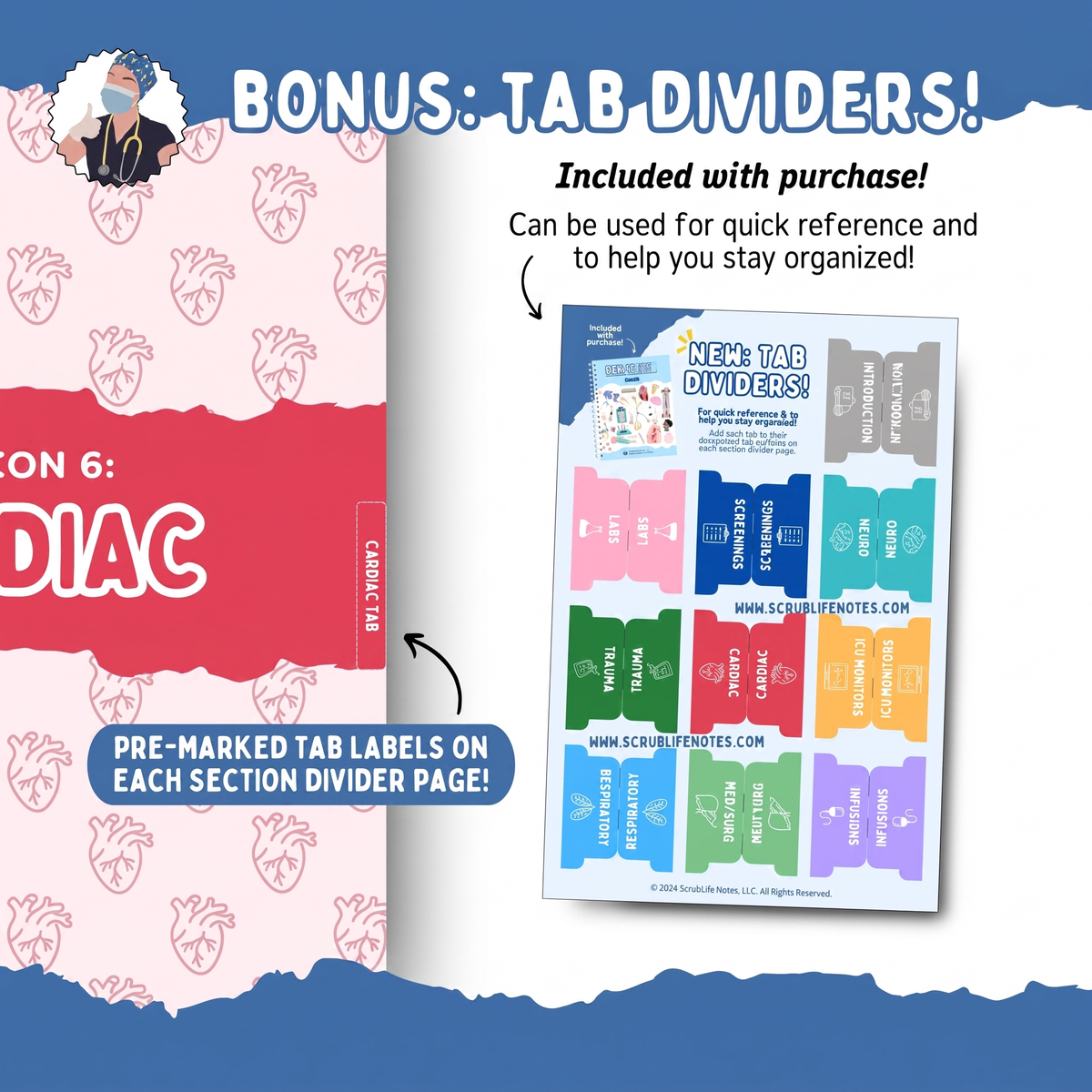
Spiral Bound With Bonus Tab Dividers
Couldn't load pickup availability
Week two of CVICU orientation and I was terrified of looking stupid in front of my preceptor. Now I read the page in the break room before I walk in the room instead of asking the same question a third time. My clinical educator saw it and asked where I got it.
How it Works
How it Works
New to ICU 2.0 by ScrubLife Notes is a visual reference guide that turns critical care concepts into full color diagrams, charts and annotated screenshots instead of dense paragraphs. When you get an assignment you have not seen before, you flip to that section, look at the drawing, and understand what you are walking into. The spiral binding lets it lie flat in the break room or at the nurses station, and the bonus tab dividers mean you can find IABP, vent settings or a drip in seconds mid shift. It is built for the first months of orientation, when you need an answer faster than you can find someone to ask.
What's Included?
What's Included?
- 1x New to ICU 2.0 by ScrubLife Notes, spiral bound full color guide
- 10x Sections: Introduction, Lab Fundamentals, Daily ICU Screenings, Neuro, Trauma, Cardiac, Invasive Monitoring, Respiratory, Medical/Surgical and Continuous Infusions
- 1x Bonus Tab Divider Sheet with pre marked labels for every section
- New expanded sections including Targeted Temperature Management and Hemodynamic Monitoring
- 19 pages of Respiratory content covering vents, modes and settings
Shipping & Return Policy
Shipping & Return Policy
All orders process within 1 to 2 business days and standard shipping arrives within 5 to 9 days for most countries. Every purchase of New to ICU 2.0 is backed by our 30 day money back guarantee, so you can try it completely risk free.


FAQs
How do nurses actually use this on shift?
How do nurses actually use this on shift?
Most people keep it in their bag and pull it out before they walk into a room with something unfamiliar. Add the tab dividers when it arrives so you can jump straight to Cardiac, Respiratory or Infusions without flipping through the whole book.
Is this only for brand new grads?
Is this only for brand new grads?
No. New grads are the biggest group, but PACU, ER, step down and float nurses use it constantly, and plenty of experienced ICU nurses buy it for the sections outside their usual population. Preceptors and educators often keep spare copies on the unit.
Is the information reliable?
Is the information reliable?
The content is evidence based and peer reviewed, written by ICU nurses rather than adapted from a textbook. It is a reference guide to support your learning and your unit's policies, not a replacement for them, so always follow your own facility protocols.
What is new in the 2.0 edition?
What is new in the 2.0 edition?
Three new sections were added, Lab Fundamentals, Daily ICU Screenings and Trauma, along with expanded coverage of Targeted Temperature Management and Hemodynamic Monitoring. Respiratory now runs 19 pages, and the bonus tab dividers are included with purchase.
Will it survive being carried to work every day?
Will it survive being carried to work every day?
It is spiral bound so it lies completely flat and folds back on itself, which is what you want when you are reading it one handed at the station. Nurses regularly report carrying the same copy through a full year of orientation and beyond.
What if I don't like New to ICU 2.0?
What if I don't like New to ICU 2.0?
Try it for 30 days, and if you are not happy for any reason we will refund you in full under our 30 day money back guarantee. Your purchase is completely risk free.

Walk In Already Knowing
The worst part of orientation is not knowing, and not wanting to ask your preceptor the same question a third time. Two minutes with the right page before you walk into the room changes how the whole shift feels.

Drawn, Not Written
An IABP console makes sense in about ten seconds when someone draws it and labels every part of the screen. That is the whole book, ten sections of critical care laid out visually instead of in paragraphs you have to decode at midnight.